
Most of what decides an IVF success rate — your age, your ovarian reserve, the underlying diagnosis — is already set before treatment starts. But a meaningful part is not. The weeks before a cycle, and the days after transfer, are where your own choices still matter. This guide covers the eight areas patients most often ask us about, what the evidence actually supports for each, and where the honest answer is simply “discuss it with your doctor”.
What is IVF?
In vitro Fertilization is a form of Assisted Reproductive Technology (ART). This involves removing eggs from a woman’s ovaries and fertilizing those using sperm. The fertilized egg is called an embryo. The embryo can be stored in a freezer or transferred to a woman’s uterus.
Factors Affecting IVF Success Rates
In Vitro Fertilization is a complex process that involves many moving parts and is highly dependent on timing. Many factors can affect your chances of IVF Success Rate.
1. Previous Pregnancy History
You will likely have a successful IVF pregnancy if you and your partner have had a happy pregnancy. IVF Success Rate can be more challenging if you have multiple miscarriages and other fertility problems with your new partner. It would help if you did not ignore it.
2. Egg and Embryo Quality
Other factors that affect the quality of eggs or embryos include age, ovarian reserve, and stimulation protocol. Higher-quality embryos and eggs will increase the chances of successful IVF treatment.
3. Sperm Quality
Egg quality is responsible for approximately 90% of all chromosomal issues in embryos. But there are still male fertility factors that can affect embryos. New technology can help to reduce fertility problems in male partners and make successful pregnancies more likely.
4. Embryo Transfer Technique
Many believe that embryo transfer is the most critical step in IVF treatment. A flawless transfer is crucial for the health of embryos and the success of the implant in the uterus. Any delay in timing or biological factors could be fatal to the process.
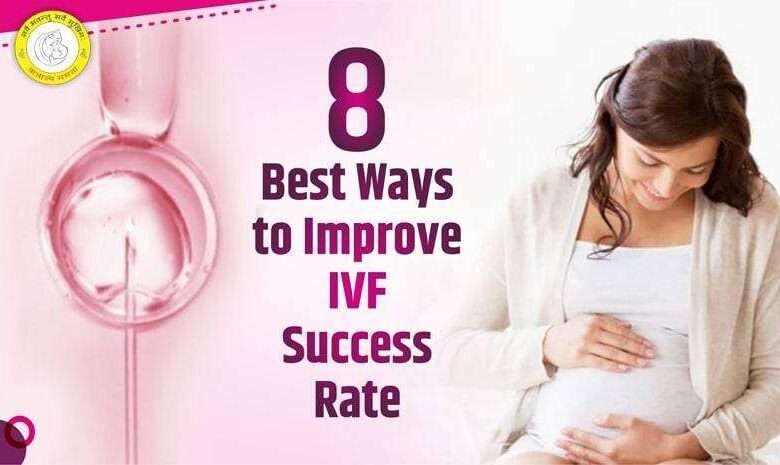
8 Best Ways to Improve Your IVF Success Rate
Here are some ways to increase your chances of having a high IVF success rate:
1. Limit Caffeine Intake
Research shows that 5 to 6 cups of coffee daily can decrease the chances of successful IVF. Experts recommend limiting caffeine-containing beverages like coffee and tea to 1 to 2 cups per day during IVF cycles and pregnancy.
2. Manage Stress with Meditation
Stress can negatively affect the reproductive system, which in turn reduces the chance of success with IVF. While it’s natural to worry about the outcome of fertility treatment, you should also relax daily. Meditation with gentle breathing techniques is a great way to reduce stress and help your body function at its best.
3. Prioritize Work-Life Balance
Assessing your work-life balance and stress levels is crucial for effectively managing your life. With constant access to emails, messages and phone calls, work and home life now overlap for most people. However, few jobs require constant supervision, even during evenings and weekends. To maintain a healthy work-life balance, learn to physically and mentally “close the door” to your office.
After you’re done working, switch off your email notifications or even turn off your phone completely. Once you get into this routine, you will realize that everything is done the next day.
4. Follow the Abstinence Window Before Sperm Collection
Laboratories usually ask for a short abstinence window — commonly 2 to 4 days — before the sperm sample is collected. Too short a gap can reduce the count in that sample; too long a gap tends to reduce motility. Your clinic will give you the exact window for your IVF cycle, and following it precisely matters more than following general advice found online.
5. Get Your BMI Into a Healthy Range
Body weight sits at both extremes of the risk curve: being significantly underweight and being significantly overweight can each make conception harder and can complicate an IVF cycle. A BMI between 18.5 and 24.9 is the range generally considered healthy, and moving towards it before starting treatment is one of the few success factors genuinely within your control.
This does not mean crash dieting before a cycle — rapid weight loss brings its own hormonal problems. A steady, supervised improvement over a few months is far more useful than a sharp drop in the weeks before egg retrieval. Discuss a realistic target with your treating doctor rather than aiming for a number you read online.
6. Avoid Harmful Substances
Quit smoking, limit alcohol, and cut back on heavily processed food. Smoking in particular affects both egg and sperm quality, and stopping well before a cycle begins gives the body time to benefit.
7. Ask Whether a Milder Stimulation Protocol Suits You
A higher drug dose does not automatically mean a better outcome. For some patients — particularly older patients and those who have responded poorly to heavy stimulation before — a milder protocol can produce fewer but better-quality eggs, with less physical strain and lower medication cost. Whether it is appropriate for you depends on your ovarian reserve and previous cycle history, so raise it with your doctor rather than requesting it outright.
8. Follow Post-Transfer Guidelines
Post-embryo transfer, avoid strenuous activity, hot baths, and deep penetration during intercourse to protect implantation.
Read the next article: How to Deal with High-Risk Pregnancy?
Prepare for a Successful IVF Journey
It can be stressful for you and your loved ones. There are many ways to increase your chances of IVF Success Rate. These include a healthy diet, proper sleep, supplements, and awareness of chemicals in household items.
We are committed to your success at IVF Centre in Patna. We can help families, couples, and singles who want to grow their families. Let’s make your baby’s dreams a reality. Talk to one of our specialists today.
FAQs
Foods to avoid after embryo transfer
Skip raw/undercooked meats, unpasteurized dairy, and high-mercury fish. Limit caffeine (<200 mg/day) and avoid alcohol.
What’s the best diet during IVF?
Whole grains, leafy greens, and berries (rich in antioxidants).
Lean proteins (e.g., eggs, fish) and healthy fats (e.g., avocados, nuts).
How can I maximize first-time IVF success?
Maintain a healthy weight, follow your clinic’s protocol, and manage stress. Consider pre-IVF testing (e.g., genetic screening).
How does age impact IVF success?
Women under 35: ~40–50% success per cycle.
Ages 35–37: ~33–40%.
Ages 38–40: ~20–30%.
Over 40: <15%, though donor eggs improve odds.
Are IVF success calculators accurate?
They provide estimates based on age, diagnosis, and prior cycles. Consult your doctor for personalized insights.
अपनी स्थिति डॉक्टर से सीधे समझें
इंटरनेट पर पढ़ी जानकारी हर मरीज़ पर लागू नहीं होती। आपकी जांच और इतिहास देखे बिना सही सलाह संभव नहीं है।
Dr. Rashmi Prasad · MBBS, DGO, DNB, PG-ART (University of Kiel, Germany) · 25+ वर्षों का अनुभव
कॉल करें: +91 97710 38137WhatsApp
मुफ्त परामर्श बुक करें →Diwya Vatsalya Mamta Fertility Centre · Patliputra Colony, Patna, Bihar – 800013
Disclaimer
This article is for general information and awareness only — it is not a substitute for professional medical advice. Every patient's situation is different; always consult a qualified doctor before making any treatment or medication decision. For a free consultation at Diwya Vatsalya Mamta Fertility Centre, Patna, call +91 97710 38137.
✓