
A diagnosis of male infertility can be difficult to process, especially when a semen analysis reports zero sperm count (azoospermia). For many couples, it feels like their chances of having a biological child have come to an end. However, that’s not always true — in most cases, testicles still produce sperm, it just doesn’t reach the semen.
What Is TESA Treatment?
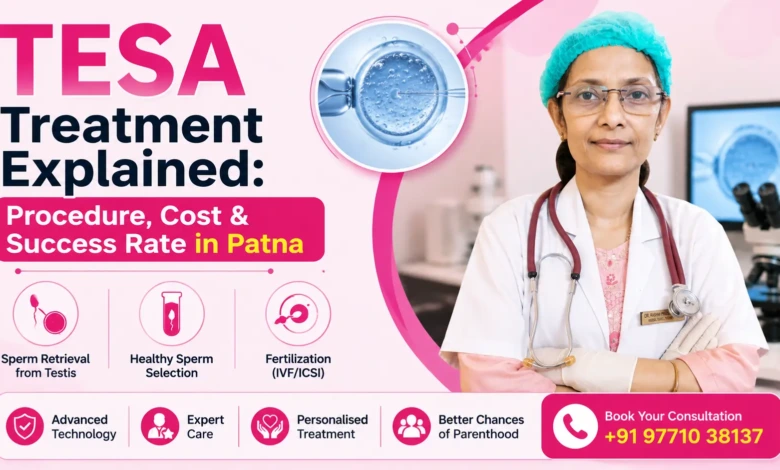
TESA (Testicular Sperm Aspiration) is a simple sperm-retrieval procedure used when sperm is absent from semen or present in very low concentration. The fertility specialist retrieves sperm directly from testicular tissue using a fine needle, rather than depending on ejaculated semen.
Embryologists then examine the sample to identify healthy sperm. Viable sperm can be used immediately in an ICSI cycle or cryopreserved for later use.
When Is TESA Recommended?
- Obstructive azoospermia — sperm production is normal but blocked from reaching semen.
- Non-obstructive azoospermia — sperm production is reduced but viable sperm may still exist inside the testicles.
- Failed sperm retrieval through ejaculation despite medical treatment.
- Post-vasectomy infertility when reversal is unsuccessful or not preferred.
- Congenital absence of the vas deferens (CAVD) or other reproductive tract abnormalities.
- Ejaculatory disorders that prevent natural sperm release.
TESA Procedure — Step by Step
Every patient’s treatment plan is personalised, but TESA generally follows these six steps:
Fertility Evaluation
A detailed assessment — semen analysis, hormone tests (FSH, LH, testosterone), physical exam, medical history, scrotal ultrasound, and genetic testing when required — confirms whether TESA is the right approach.
Local Anaesthesia
TESA is performed under local anaesthesia; patients stay awake but comfortable. Mild sedation is available for anxious patients. Hospital admission isn’t required — it’s a day-care procedure.
Sperm Aspiration
Once the area is numbed, a fine needle is inserted into the testicle and a small amount of tissue and fluid is gently aspirated. The process takes just 15–30 minutes with no stitches involved.
Laboratory Examination
The sample goes straight to the embryology lab, where it’s examined under specialised microscopes. Healthy sperm is prepared for immediate ICSI or preserved via cryopreservation.
Recovery
Most patients go home within a couple of hours. Mild swelling or tenderness in the first 1–2 days is normally managed with rest, medication and supportive underwear. Desk work can usually resume within a day or two.
ICSI or Sperm Freezing
If egg retrieval is scheduled the same day, sperm is used immediately in ICSI. Otherwise, it’s frozen and stored for a later IVF cycle.
TESA Cost in Patna — What to Expect
Pricing depends on diagnosis, treatment plan, lab requirements, and whether TESA is standalone or bundled with IVF/ICSI.
| Component | Typical Range (₹) |
|---|---|
| TESA procedure (standalone) | ₹25,000 – ₹35,000 |
| TESA + ICSI (combined cycle) | ₹1,10,000 – ₹1,20,000 |
| Sperm freezing / storage (per year) | ₹5,000 – ₹10,000 |
| Pre-procedure diagnostics (hormone tests, USG) | ₹3,000 – ₹8,000 |
TESA Success Rate — What You Should Know
There are two distinct success measures: sperm retrieval success (finding healthy sperm) and pregnancy success (which also depends on egg quality, maternal age, embryo development and uterine health).
90%+ Retrieval Success
Sperm production is unaffected by the blockage, so retrieval rates are consistently high.
50–70% Retrieval Success
Depends on the extent of testicular damage and presence of viable sperm.
Overall IVF/ICSI success at Diwya Vatsalya Mamta Fertility Centre is 75%+, reflecting modern embryology, individualised planning, and thorough case assessment. Dr. Rashmi Prasad doesn’t recommend TESA to everyone — she identifies the exact cause of infertility first, then suggests the most suitable treatment.
Who Should Consider TESA?
- Repeated semen analysis reports showing zero sperm count.
- Diagnosed with obstructive azoospermia.
- Non-obstructive azoospermia with likely viable testicular sperm.
- No response to medication or other treatments for severe male infertility.
- Had a vasectomy and don’t want a reversal procedure.
- Congenital conditions such as absence of the vas deferens (CAVD).
- Previous unsuccessful sperm retrieval attempts.
- Ejaculatory disorders preventing natural sperm release.
Explore related care for male infertility treatment in Patna to understand the full range of options beyond TESA.
Is TESA Safe?
When performed by a skilled fertility expert, TESA is a safe, minimally invasive procedure. Since it uses only a fine needle — not surgery — complications are rare and recovery is fast. Common mild side effects include:
- Temporary soreness
- Mild swelling
- Slight bruising
- Minor discomfort while walking
These usually resolve within a few days with rest, prescribed medication, and supportive underwear.
TESA vs TESE vs PESA — What’s the Difference?
TESA, TESE and PESA all retrieve sperm, but the method and ideal use-case differ:
| Procedure | Method | Best For |
|---|---|---|
| TESA | Needle aspiration from the testicle | Quick sperm retrieval with minimal tissue disruption |
| TESE | Small surgical incision to remove testicular tissue | Cases where TESA doesn’t retrieve sufficient sperm |
| PESA | Needle aspiration from the epididymis | Men with obstructive azoospermia and normal sperm production |
Why Choose Diwya Vatsalya Mamta Fertility Centre for TESA in Patna?
TESA’s effectiveness depends as much on the embryology lab and specialist’s skill as on the procedure itself. Couples choose our IVF Center in Patna because of:
- 25+ years of experience under Dr. Rashmi Prasad, Director and Senior IVF Specialist.
- 65,000+ IVF cases handled, including complex male infertility cases.
- Modern embryology laboratory for sperm retrieval, processing, and ICSI.
- Thorough fertility assessment prior to prescribing treatment.
- Individualised therapy based on each couple’s diagnosis.
- Transparent pricing with written treatment estimates.
- Empathetic counselling throughout the fertility journey.
- Convenient location in Patliputra Colony, Patna, serving Bihar since 2010.
📞 Book a Confidential TESA Consultation
Discuss your fertility treatment options with Dr. Rashmi Prasad’s team — reply within 30 minutes.
📞 Call: +91 97710 38137 💬 WhatsApp NowFrequently Asked Questions (FAQ)
Is TESA painful?
The procedure is mostly painless as it’s done under local anaesthesia. Most men experience slight soreness or swelling for 24–48 hours, managed with rest and medication.
How long does the TESA procedure take?
TESA takes 15–30 minutes. Since it’s a day-care procedure, patients are usually discharged a few hours after.
What is the cost of TESA in Patna?
Standalone TESA typically costs ₹25,000–₹35,000. Combined with ICSI and an IVF cycle, total cost usually ranges from ₹1,10,000–₹1,20,000, depending on diagnosis and treatment plan.
Can TESA be performed if semen analysis shows zero sperm count?
Yes. TESA is specifically recommended for azoospermia (zero sperm count) when sperm is believed to be present in testicular tissue but not reaching the semen.
Is TESA always successful?
No fertility procedure guarantees success. Sperm retrieval is generally more successful in obstructive azoospermia than in non-obstructive cases. A thorough fertility assessment helps estimate your chances.
Will I need IVF after TESA?
In most cases, yes — sperm retrieved via TESA is typically used in ICSI as part of an IVF cycle. Your specialist will recommend the best course based on your diagnosis.
What factors affect the success of TESA?
Success depends on the cause of azoospermia, sperm quality, maternal age, ovarian reserve, embryo quality, and the expertise of the fertility team.
Disclaimer
This article is for general information and awareness only — it is not a substitute for professional medical advice. Every patient's situation is different; always consult a qualified doctor before making any treatment or medication decision. For a free consultation at Diwya Vatsalya Mamta Fertility Centre, Patna, call +91 97710 38137.
✓