
Starting fertility treatment can feel unfamiliar, and it is natural to have many questions. In simple terms, IVF treatment in Bihar works in stages: a fertility specialist first evaluates both partners, medicines help the ovaries develop eggs, the eggs are collected and fertilized in a laboratory, and a resulting embryo may be placed in the uterus. About two weeks later, a pregnancy test shows whether treatment has worked. This guide walks first-time couples through each stage, what to expect, and what to ask along the way.
Table of Contents
What Is IVF Treatment?

IVF stands for in vitro fertilization. “In vitro” means “in glass”: fertilization happens in a laboratory dish instead of inside the body. Eggs are collected from the woman’s ovaries, combined with prepared sperm, and monitored as they develop into embryos. One or more embryos may then be transferred into the uterus in the hope of achieving pregnancy.
In natural conception, the egg is released, meets sperm in the fallopian tube, and the embryo travels to the uterus. The IVF process replaces some of these steps with carefully timed medical support, which is why each stage is monitored closely.
It is important to be realistic. IVF can help many couples, but it does not guarantee pregnancy. Success depends on factors such as age, the cause of infertility, egg and sperm quality, and embryo development. This is why a specialist first looks for the reason behind the difficulty in conceiving, rather than starting treatment straight away.
Who May Be Advised to Consider IVF?
A doctor may suggest IVF when other approaches are unlikely to work or have not worked. Common situations include blocked or damaged fallopian tubes, certain forms of male-factor infertility, selected cases of endometriosis, age-related decline in fertility, and infertility that remains unexplained after a full evaluation.
IVF is not automatically the first step for every couple. Some may do well with simpler options, such as lifestyle changes, treatment of an underlying condition, ovulation-inducing medicines, or intrauterine insemination (IUI). A good specialist considers both partners’ test results, medical history, age, preferences, and budget before recommending a plan.
Step-by-Step: What Happens in an IVF Cycle
The exact plan differs from couple to couple. The steps below describe the general pathway, along with what you can expect, do, and ask at each stage. Choosing an experienced IVF Center in Bihar can help you stay closer to home during frequent monitoring visits.
Step 1: Initial Consultation and Fertility Evaluation
The journey begins with a conversation. The specialist reviews your medical history, how long you have been trying to conceive, any previous pregnancies or treatments, and lifestyle factors. Both partners are usually evaluated, even if one has already had tests.
Depending on your situation, investigations may include:
- AMH (anti-Mullerian hormone) test: a blood test that gives an idea of ovarian reserve, meaning the number of eggs remaining.
- Pelvic ultrasound and antral follicle count: a scan that counts small follicles (tiny fluid-filled sacs in the ovary that may contain eggs).
- Other hormone tests and an assessment of the uterus and fallopian tubes.
- Semen analysis for the male partner.
Not everyone needs every test. At Diwya Vatsalya Mamta Fertility Centre, as at any reputable clinic, the aim of this visit is to understand your individual situation before suggesting a treatment plan.
Step 2: Personalised Treatment Planning and Ovarian Stimulation
Once the evaluation is complete, the specialist designs a protocol for you. In most cycles, injectable or oral fertility medicines are given for several days to encourage the ovaries to develop multiple follicles instead of the single egg usually released each month.
During this phase you will visit the clinic for ultrasound scans, and sometimes blood tests, so the doctor can track your response and adjust the medicine dose. The type of medicine, the number of injections, and the duration all vary. Please follow your own doctor’s instructions rather than comparing with another patient’s plan.
Step 3: Trigger Medication and Egg Retrieval
When the follicles are mature enough, you receive a trigger injection that finalizes egg maturation. Egg retrieval is timed carefully after this, usually about 34 to 36 hours later.
Retrieval is a short, ultrasound-guided procedure in which a fine needle collects eggs from the follicles. It is generally done with pain relief or sedation, and most women go home the same day. Some cramping or bloating afterwards is common, though experiences vary.
Step 4: Sperm Collection and Fertilisation in the Laboratory
On the day of retrieval, the male partner provides a semen sample, which the laboratory prepares to select healthy sperm. The eggs and sperm are then brought together so that fertilization can happen.
In some cases, the embryologist uses ICSI (intracytoplasmic sperm injection), where a single sperm is injected directly into an egg. ICSI is recommended when there is a clinical reason, such as low sperm count or previous fertilization problems. It is not needed in every IVF cycle.
Step 5: Embryo Development and Assessment
Fertilized eggs are watched in the embryology laboratory over the next few days as they divide and grow into embryos. Some clinics grow embryos to the blastocyst stage (around day 5 or 6), when the embryo is more developed and easier to assess.
Embryo development varies. Not every egg fertilizes, and not every embryo continues to grow. Your clinic should update you honestly on how many embryos are developing and their quality.
Step 6: Embryo Transfer or Frozen Embryo Transfer
Embryo transfer is a simple procedure in which a thin catheter places an embryo into the uterus, usually without anesthesia. It is often compared to a gentle pelvic examination.
Transfer may happen in the same cycle (fresh transfer), or embryos may be frozen and transferred in a later cycle (frozen embryo transfer, or FET). Your doctor may recommend freezing for reasons such as preparing the uterine lining, reducing the risk of OHSS, or genetic testing. Not every patient has a fresh transfer.
Step 7: Waiting Period, Pregnancy Test, and Follow-Up
After transfer, you may continue prescribed medicines, often called luteal support, to help prepare the uterus. The wait before testing can be emotionally demanding, so lean on your partner, family, or a counsellor.
The clinic will tell you when to take the beta-hCG test, a blood test that measures the pregnancy hormone. The date is set by your treating team, so avoid testing earlier at home, which can give a confusing result. A positive result needs follow-up scans and care. A negative result should be discussed with your specialist, who can review the cycle and advise on next steps.
How Long Does IVF Take?
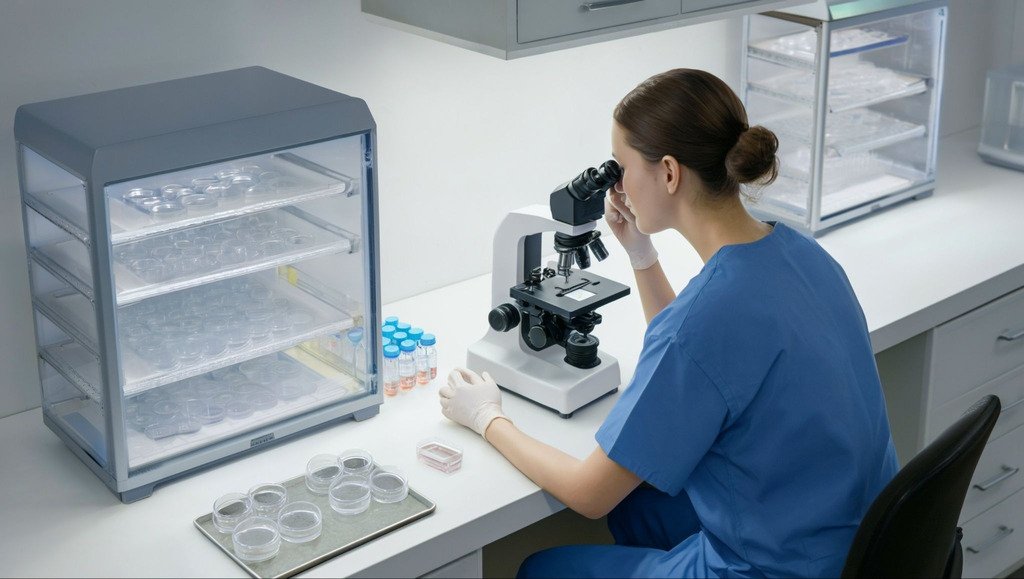
The active treatment cycle often takes around three to six weeks, according to the NHS, although individual plans differ. The full journey can be longer, because pre-treatment tests, scheduling, recovery time, frozen transfers, or additional treatments can extend the overall timeline.
| Stage | What affects timing? |
|---|---|
| Consultation and testing | Required investigations and previous results |
| Ovarian stimulation | Medication protocol and ovarian response |
| Egg retrieval and fertilization | Trigger timing and laboratory findings |
| Embryo transfer | Fresh or frozen transfer plan |
| Pregnancy testing | Clinic-recommended test date |
Ask your doctor for a timeline built around your own plan, and remember that it may change as your body responds.
Is IVF Painful? What Should First-Time Couples Expect?
It is normal to feel anxious about pain. Injections can cause mild discomfort or bruising, and stimulation may bring bloating, breast tenderness, or mood changes. Egg retrieval is done with pain relief or sedation, so you are comfortable during the procedure, though you may feel cramping afterwards. Embryo transfer is usually quick and done without general anesthesia.
Experiences differ from person to person, and IVF is not completely free of discomfort. Ask the clinic what to expect at each stage, and find out whom to contact if you develop severe pain, heavy bleeding, or sudden swelling.
What Are the Possible Risks and Limitations of IVF?
IVF is widely used and generally safe when carefully supervised, but it is not risk-free. Possible side effects of fertility medicines include headaches, bloating, and mood changes. A less common but important complication is ovarian hyperstimulation syndrome (OHSS), where the ovaries over-respond to medication. Egg retrieval carries small procedural risks such as bleeding or infection.
There are also limitations: sometimes no suitable embryo is available for transfer, and pregnancy is never guaranteed. Individual risks depend on your health and treatment plan, so discuss them openly with your doctor before you begin.
How to Choose a Fertility Clinic for IVF
Many couples search for the Best IVF hospital in Bihar, but no single label fits every family. The right place is one that is transparent, qualified, and a good match for your needs. Use this checklist:
- Check the clinic’s applicable registration and the qualifications of its doctors. Bihar has adopted the Clinical Establishments Act, so ask to see the clinic’s registration details.
- Ask who will oversee your treatment and explain your results.
- Understand which embryology laboratory services are available.
- Request a written treatment plan and an itemized estimate of costs.
- Find out what the quoted package includes and excludes.
- Ask how risks, changes to your plan, and follow-up care are communicated.
- Ask how the clinic reports success rates and what those figures actually measure.
Be cautious of guarantees of success or unusually low prices without explanation.
Preparing for Your First IVF Consultation
A little preparation makes your first visit to an IVF clinic in Bihar far more productive. Bring:
- Previous test reports, scans, and treatment records
- A list of current medicines and relevant medical history
- Menstrual-cycle details, if the clinic asks for them
- Your questions about cost, time, risks, and follow-up
Both partners may need to attend or share information, depending on the clinic’s instructions. Visiting together, if possible, helps you both hear the same advice. If you are travelling from another district, ask about appointment scheduling so you can plan around your monitoring visits. Many couples also find it useful to book the first consultation at Diwya Vatsalya Mamta Fertility Centre or another trusted clinic and note down the doctor’s answers.
Conclusion
IVF involves several stages, and the right plan depends on a careful evaluation of both partners. A negative result or a delay is not the end of your options. If you are considering IVF treatment in Bihar, a consultation with Diwya Vatsalya Mamta Fertility Centre can help you understand your choices and what to expect, without any promise of outcomes. Contact the clinic to book your visit.
Considering IVF Treatment in Bihar?
Take the first step toward understanding your fertility options. Contact Diwya Vatsalya Mamta Fertility Centre today to book your consultation and discuss a treatment plan tailored to your needs.
Frequently Asked Questions About IVF
How does IVF work for couples in Bihar?
IVF combines eggs and sperm in a laboratory to create embryos, which may be transferred into the uterus. The process is the same everywhere, but your doctor tailors medicines and timing to your evaluation.
What are the main steps in IVF?
The main steps are consultation and testing, ovarian stimulation, egg retrieval, fertilization, embryo development, embryo transfer, and a pregnancy test. Your plan may vary depending on your diagnosis.
How long does one IVF cycle take?
A typical cycle takes around three to six weeks, but this varies. Tests before treatment and frozen transfers can lengthen the overall journey.
Which tests are needed before starting IVF?
Common tests include AMH, hormone tests, a pelvic ultrasound, and semen analysis. The specialist decides which are necessary for you.
Is IVF painful for women?
It involves some discomfort, but not usually severe pain. Egg retrieval is done with pain relief or sedation, and injections and bloating are manageable for most women.
What happens after egg retrieval?
You rest for a short time and usually go home the same day. Mild cramping or bloating is common, and the laboratory begins fertilizing the eggs. Contact your clinic if pain or bleeding is severe.
Is ICSI necessary for every IVF cycle?
No. ICSI is used only when there is a clinical reason, such as low sperm count or earlier fertilization failure. Your doctor will explain whether you need it.
When can a pregnancy test be taken after embryo transfer?
The beta-hCG blood test is usually done about two weeks after transfer, but your clinic will give you the exact date. Testing too early can be misleading.
Does every IVF cycle result in pregnancy?
No. Success varies with age, diagnosis, and embryo quality. If a cycle does not work, your specialist can review it and discuss future options.
How can couples choose a fertility center in Bihar?
Check registration, doctor qualifications, laboratory facilities, and communication. Ask for a written plan with itemized costs, and avoid clinics that promise guaranteed results.
Our Location
Disclaimer
This article is for general information and awareness only — it is not a substitute for professional medical advice. Every patient's situation is different; always consult a qualified doctor before making any treatment or medication decision. For a free consultation at Diwya Vatsalya Mamta Fertility Centre, Patna, call +91 97710 38137.
✓